Within the papers of Mathie, MacLuckie and Lupton are the executry papers of Reverend Robert Cunningham Graham. Born on 7th March 1798, he was the son of Reverend Patrick Graham, the preceding minister of Aberfoyle. He studied at Glasgow University and was ordained on 24th January 1828. He served as minister of Aberfoyle until his death on 13th October 1844, succeeding his father, who died in 1835. As well as being minister of Aberfoyle, he also wrote the section on Aberfoyle in the New Statistical Account of Scotland in May 1843.
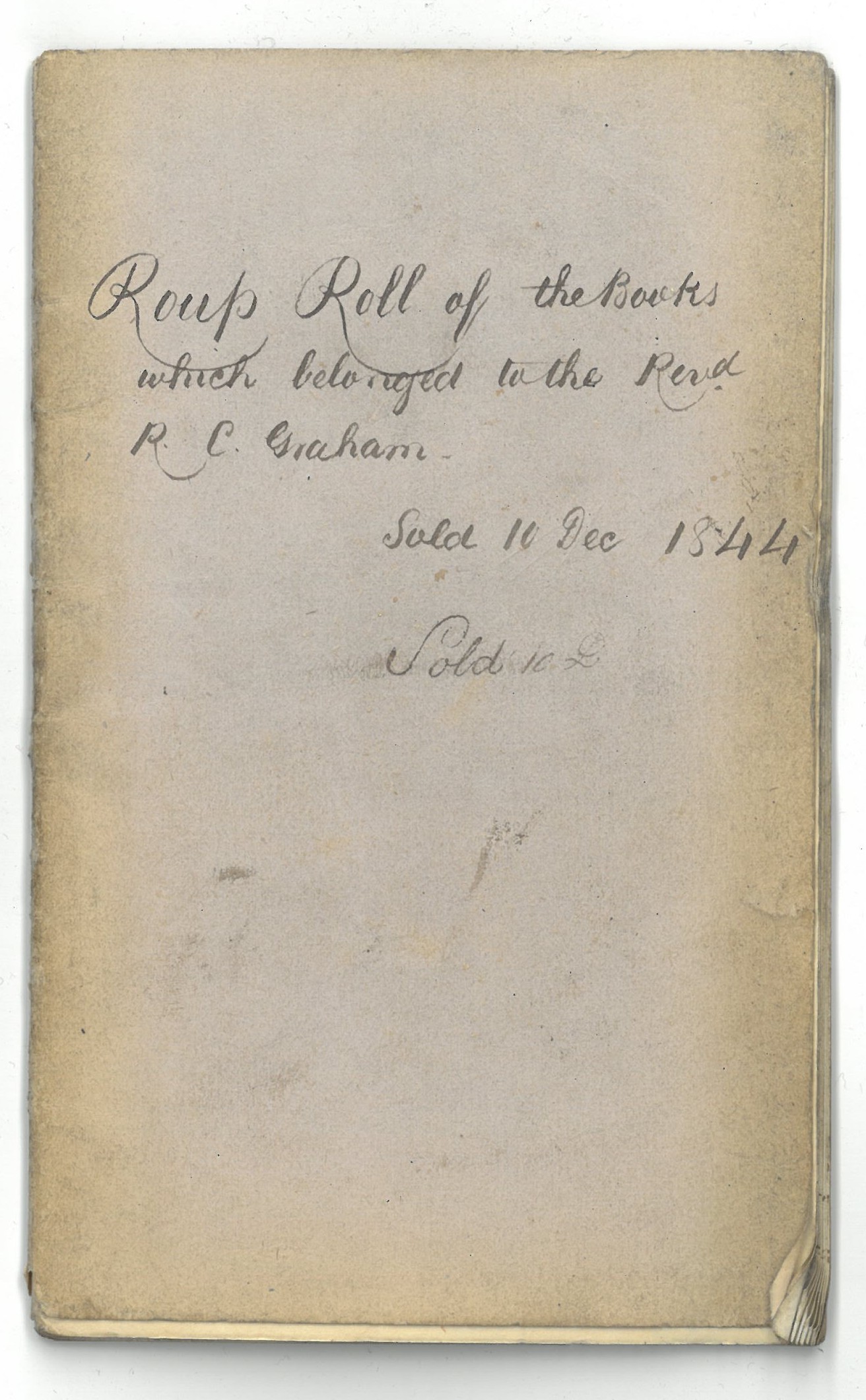
A record that you would expect to find within an individual’s executry papers is an inventory of personal effects. These would generally have been listed for a ‘roup’, a public auction of the effects. The itemised list would be known as a ‘roup roll’. A particularly interesting roup roll found in the executry papers of Robert Cunningham Graham is the Roup Roll of the Books Which Belonged to R. C. Graham, recording books sold on 10th December 1844.
The auction took place at the Manse of Aberfoyle, and an advertisement in the Stirling Observer notes that there were around 400 volumes up for sale. The collection included books that had previously belonged to his father.
The roll is arranged alphabetically, with the purchaser and sale price listed on the opposite page. There are several instantly recognisable volumes present, including Walter Scott’s Rob Roy and The Lady of the Lake.
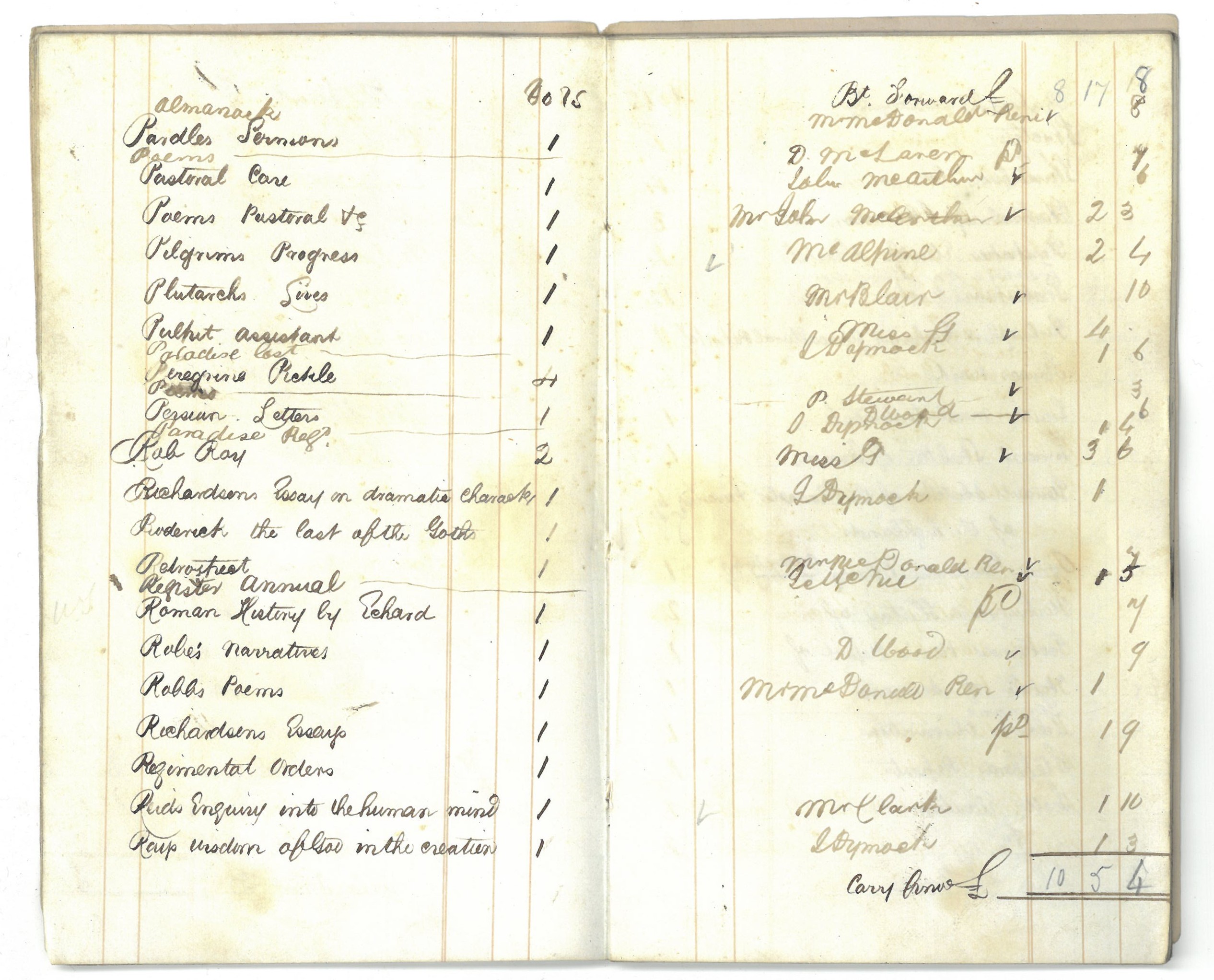
The collection itself is eclectic, with religious, scientific, mathematical and historical texts appearing throughout. This is perhaps unsurprising, given that his section on the ‘Parish of Aberfoyle’ in The New Statistical Account of Scotland covered a wide range of topics, including topography and natural history, civil history, and industry.
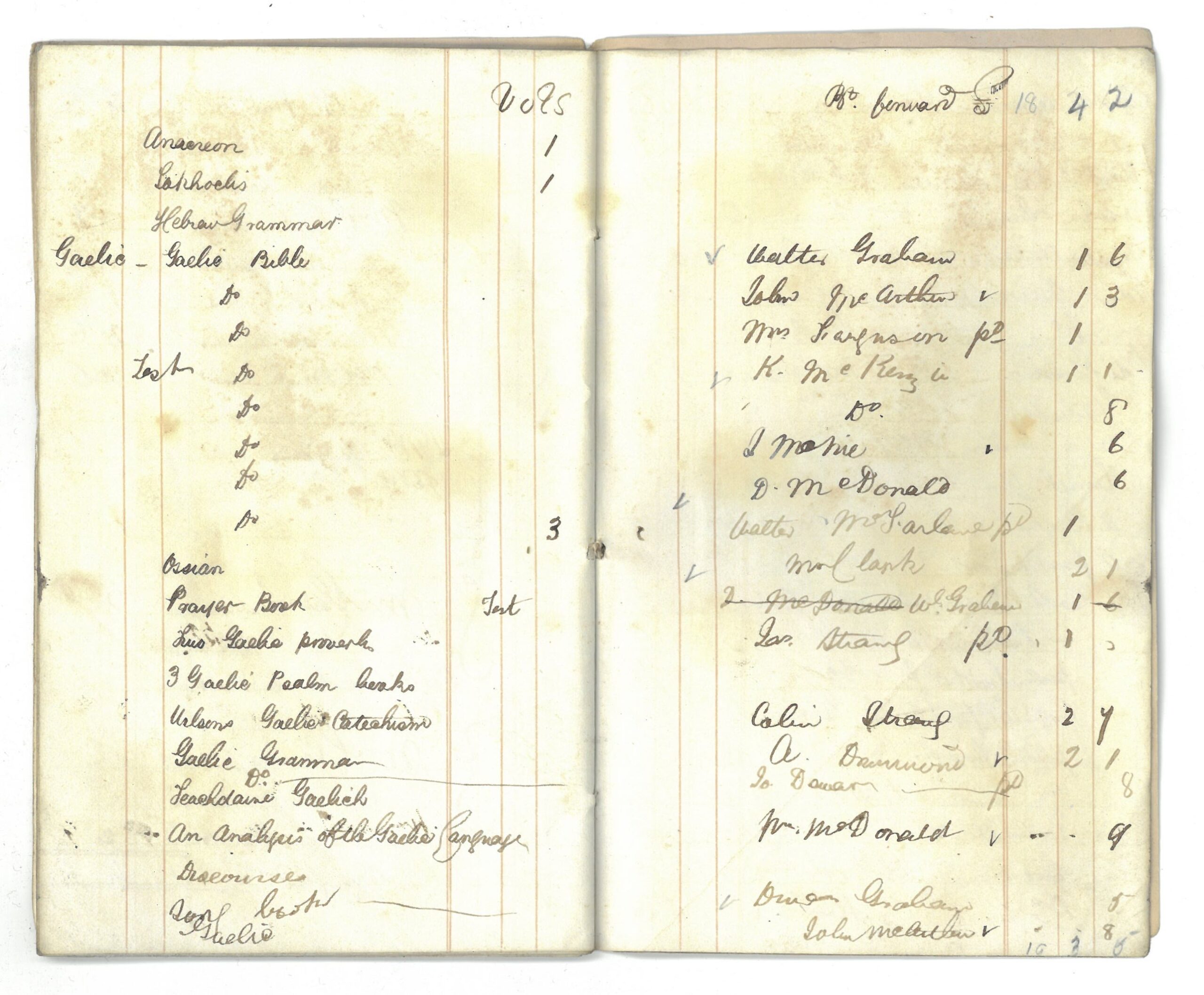
An interesting section is devoted specifically to Gaelic texts. It includes eight Gaelic bibles, three Gaelic psalm books, a book on Gaelic grammar, and An Analysis of the Gaelic Language by William Shaw. The Gaelic texts may have been owned by his father, as Robert himself noted that he was “long engaged… in revising the new edition of the Gaelic Scriptures”. He also observed that “in former times, Gaelic was the language generally spoken in this parish”. (The New Statistical Account of Scotland, 1845)
It is unclear which books had specifically belonged to his father. He certainly would have owned a great many, with Robert noting that his father was “eminent for the variety and extent of his literary acquirements, a profound scholar, an able divine, and an elegant writer”. (The New Statistical Account of Scotland, 1845)

