This month’s document was deposited with the Archives last year as part of the records of the Erskine family of Cardross.
King James is writing to David Erskine, who was nephew of the First Earl of Mar, the member of the Scots nobility who acted as Regent to the young King James during his minority and took care of his upbringing within the walls of Stirling Castle. David Erskine was granted the Commendatorship of the Abbey at Dryburgh by his uncle in July 1556. The Commendator was a secular head of the Abbey, who saw to the administration of its lands and assets.
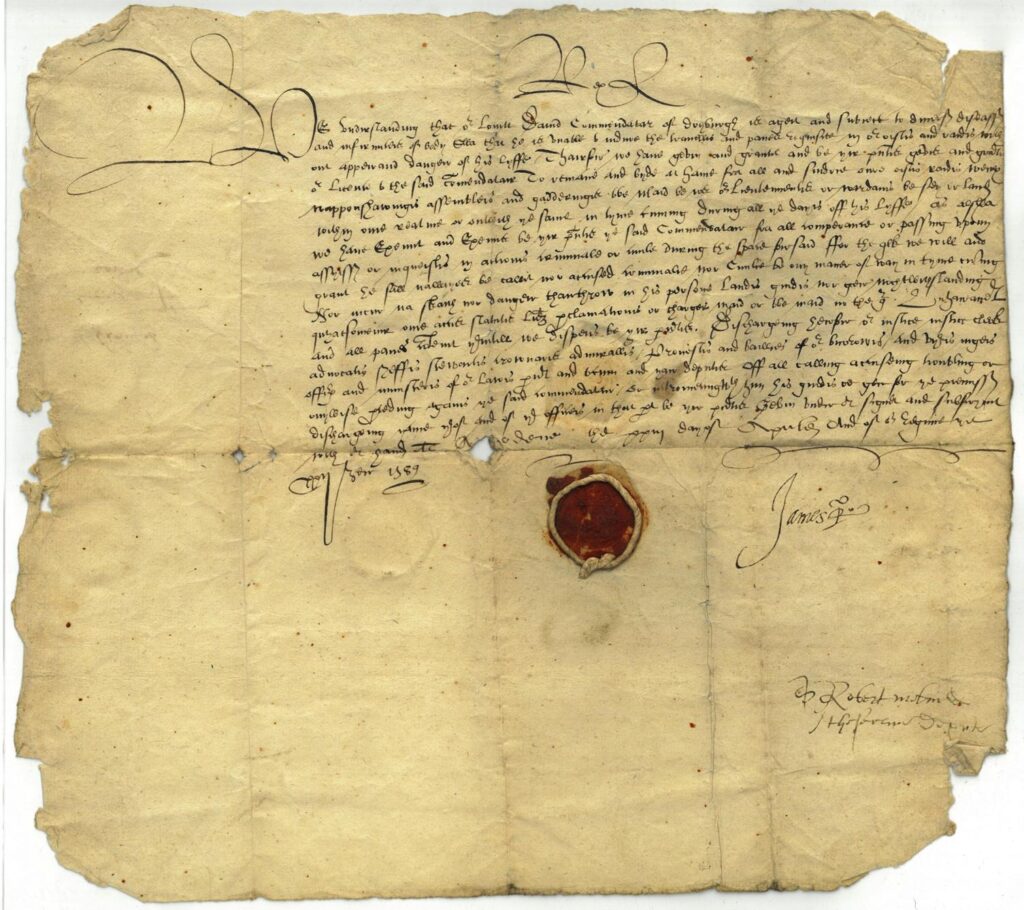
James VI to David, Lord Erskine 23rd April 1589
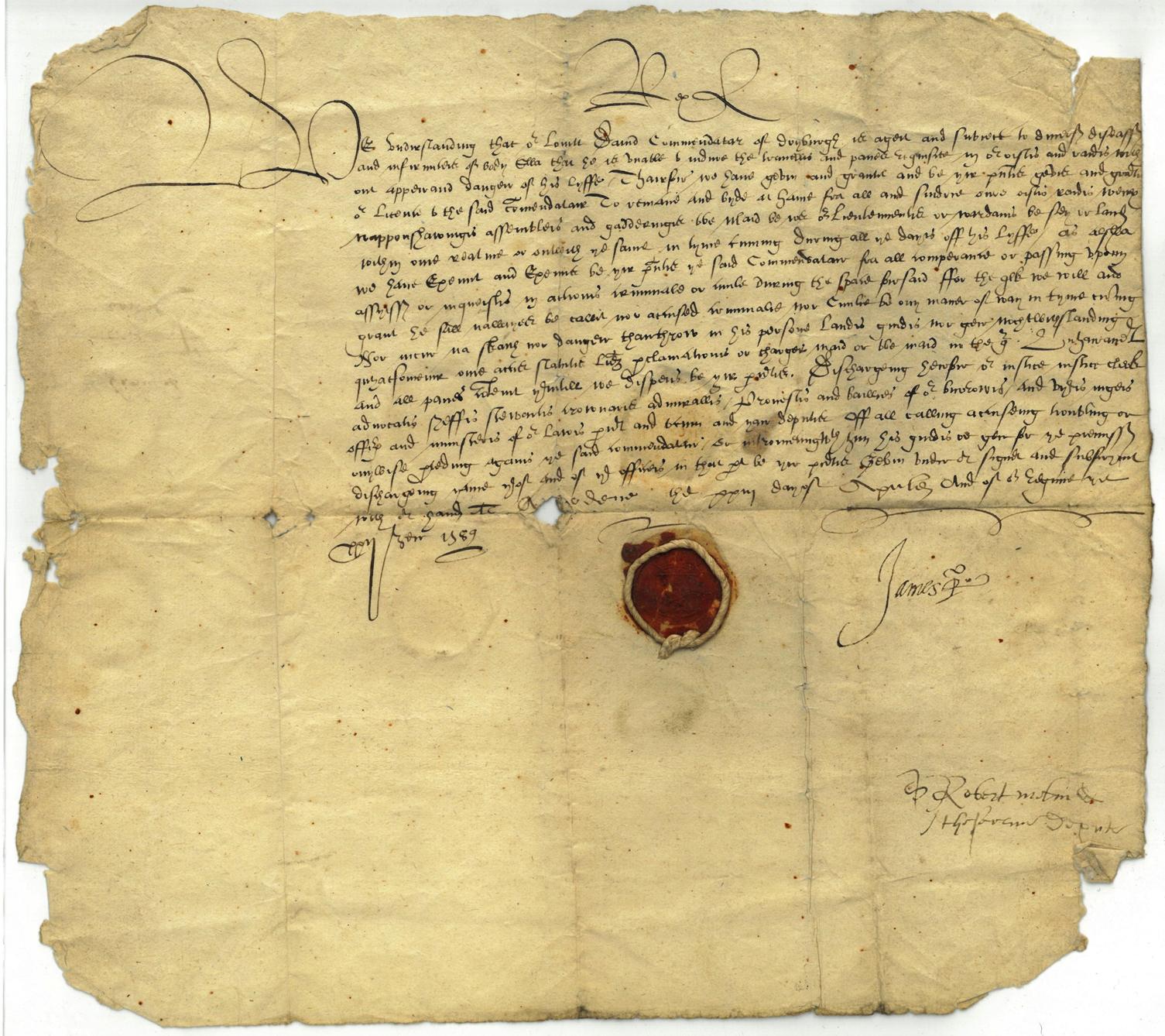
In this letter, the King excuses David Erskine the military and other obligations that he owes to the Crown on the grounds that David is ‘ageit’ (aged – he was in his mid to late forties at the time), ‘and subject to divers diseases and infirmities of the body’. As this was around a year after the invasion threat posed by the Spanish with their Armada, and the King was probably concerned as to the possibility of Spanish or Catholic plots, the likelihood of the nobility being expected to undertake military service for the crown was quite high.
In addition, the letter stipulates that Erskine is to be regarded as exempt from appearances at the Assises in both criminal and civil cases. This may imply that the King wished to give him protection from hostile neighbours. It is possible that David was embroiled in local feuds at the time of the letter, as not long after this, his wife was ‘detained’ by another landowner for reasons that are not now entirely clear.
David Erskine had a chequered relationship with his King, having been involved in the Ruthven Raid of 1582, when the then sixteen-year-old King was held as a virtual prisoner of a group of influential magnates who wished to control him and rid the country of his favourite, Esmé Stewart, Sieur d’Aubigny, later the Earl of Lennox. As a punishment for these actions, Erskine was deprived of the Commendatorship along with his land holdings until he regained the King’s trust in 1585, when all was restored to him.
This document is a wonderful example of Royal favour being extended to a member of the Scottish nobility and an insight into the obligations owed to the Crown by the noble classes at this turbulent time in Scottish history.

