Amongst the records of Stirling District Council in the Archives are a series of publicity photographs depicting the various productions that were mounted as part of the Council’s Living History series of plays.
The plays were performed in the various settings around Stirling having connections with the events of the lives of the characters about whom they were written, where this was practical. This is reflected in the photographs taken to publicise each event.
Stirling is rich in history and was the place of residence of or visited by many well-known figures from Scotland’s. Many of these were chosen as the subjects of the dramas. Plays were written about numerous Scottish monarchs including Robert Bruce, James III, IV, V and VI, Mary, Queen of Scots, and also other famous figures such as William Wallace and John Knox. There were also productions concerning those who were involved much more directly with Stirling’s history, such as John Damian, John Cowane, and John Baird and Andrew Hardie.
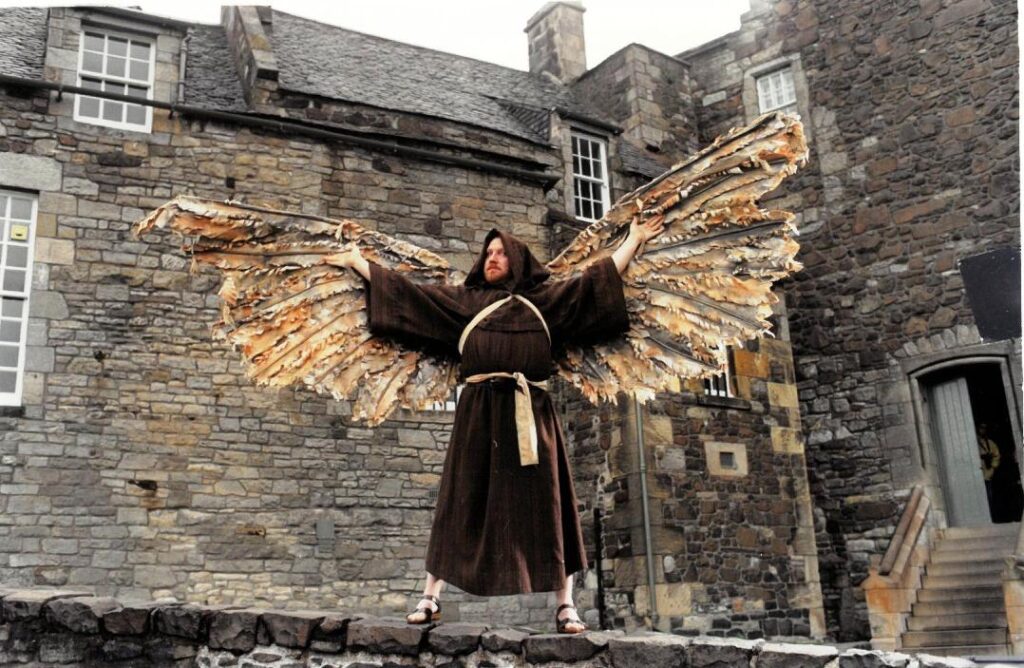
John Damian at Stirling Castle 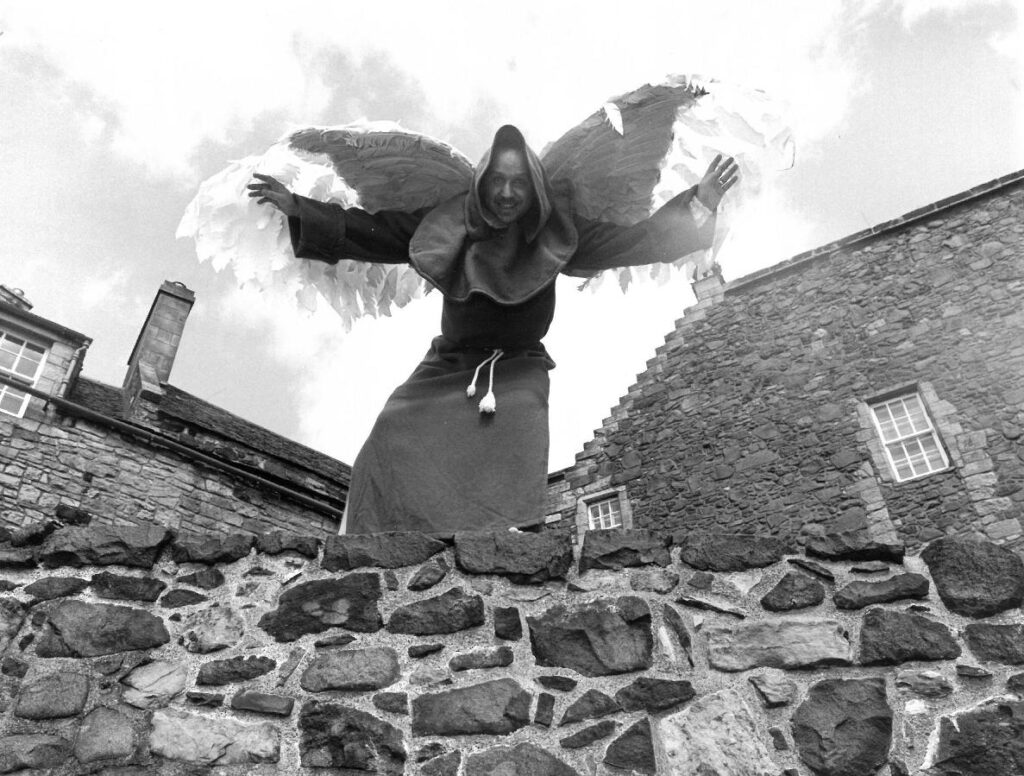
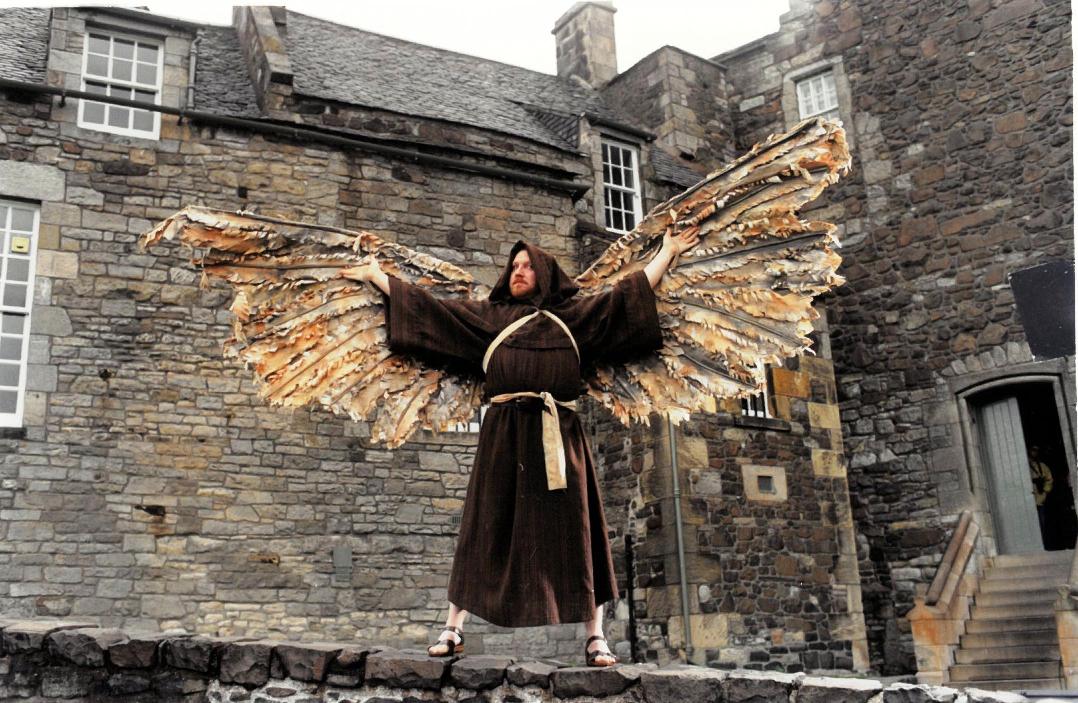
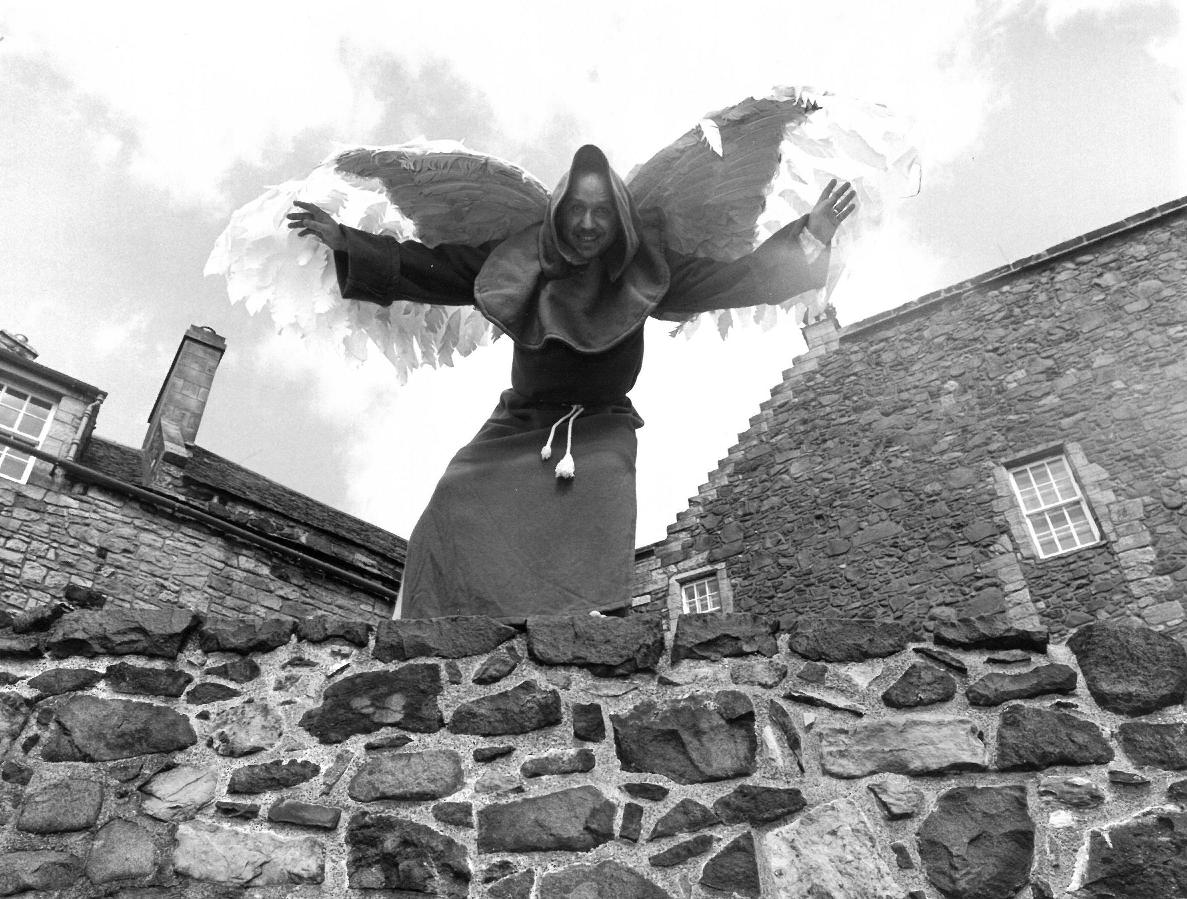
These two photographs were taken to promote the play dramatising the attempt made by John Damian de Falcuis, an alchemist and member of the court of James IV at Stirling, to achieve man-powered flight. In 1507, Damian fashioned himself a pair of wings using canvas and feathers and tried to ‘fly’ off Stirling Castle battlements. Fortunately for him, he survived the experiment due to landing in a pile of refuse below the Castle walls.
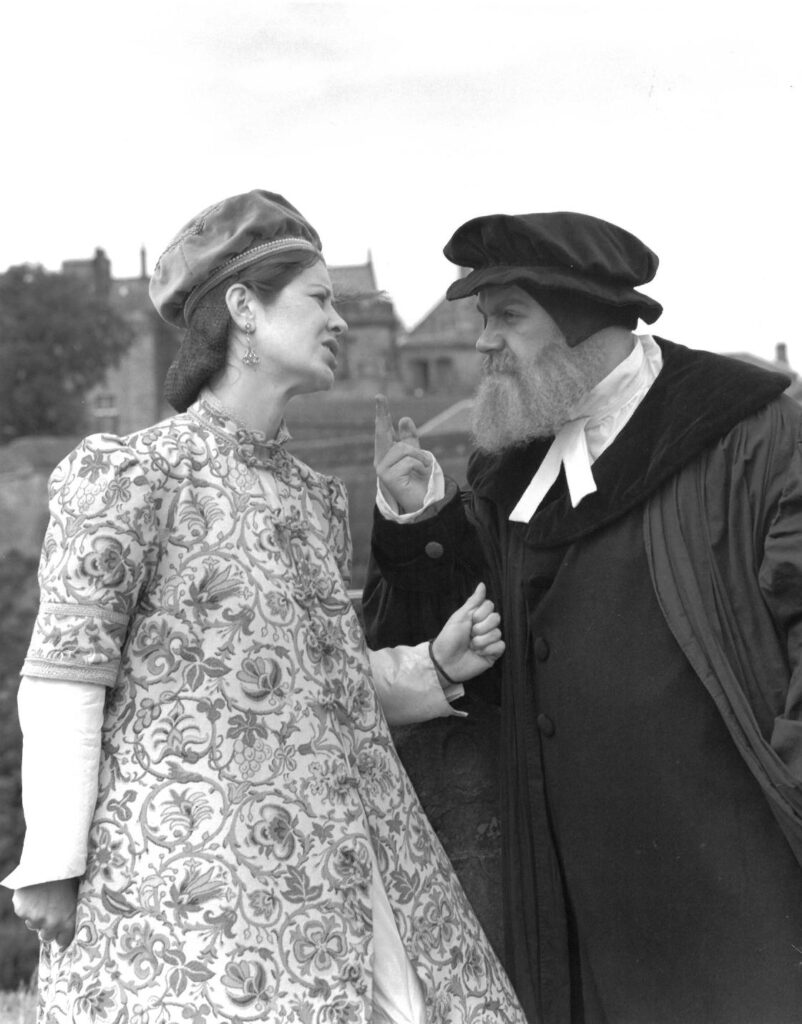
The play about John Knox and Mary, Queen of Scots 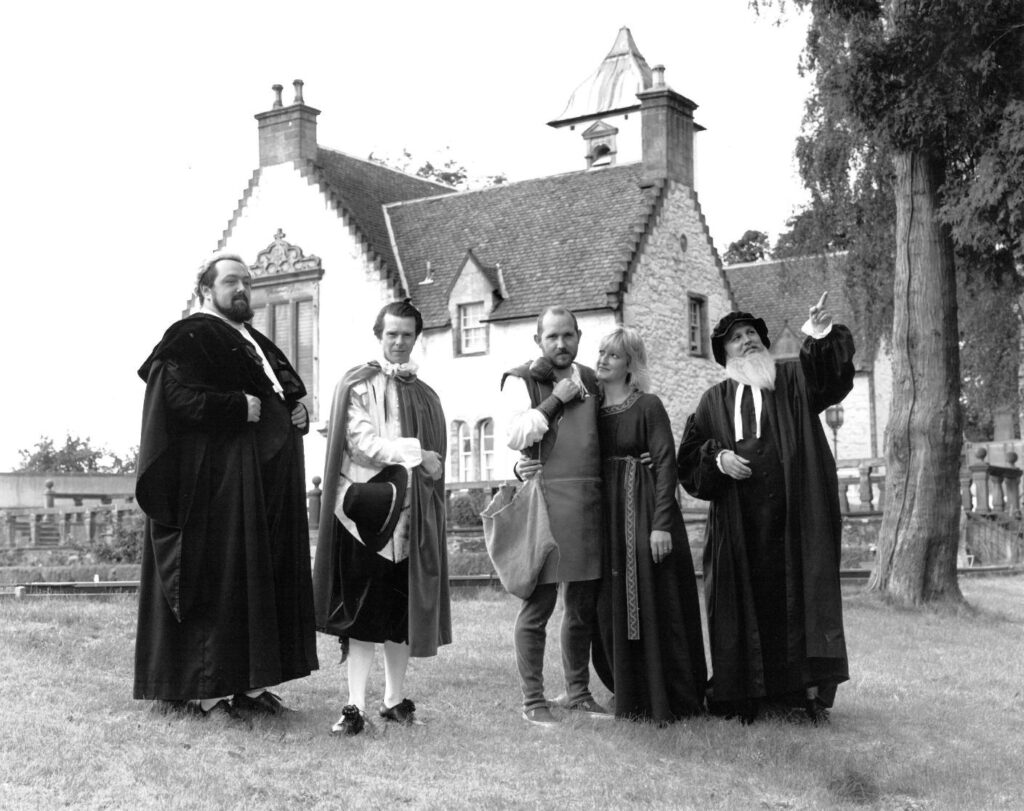
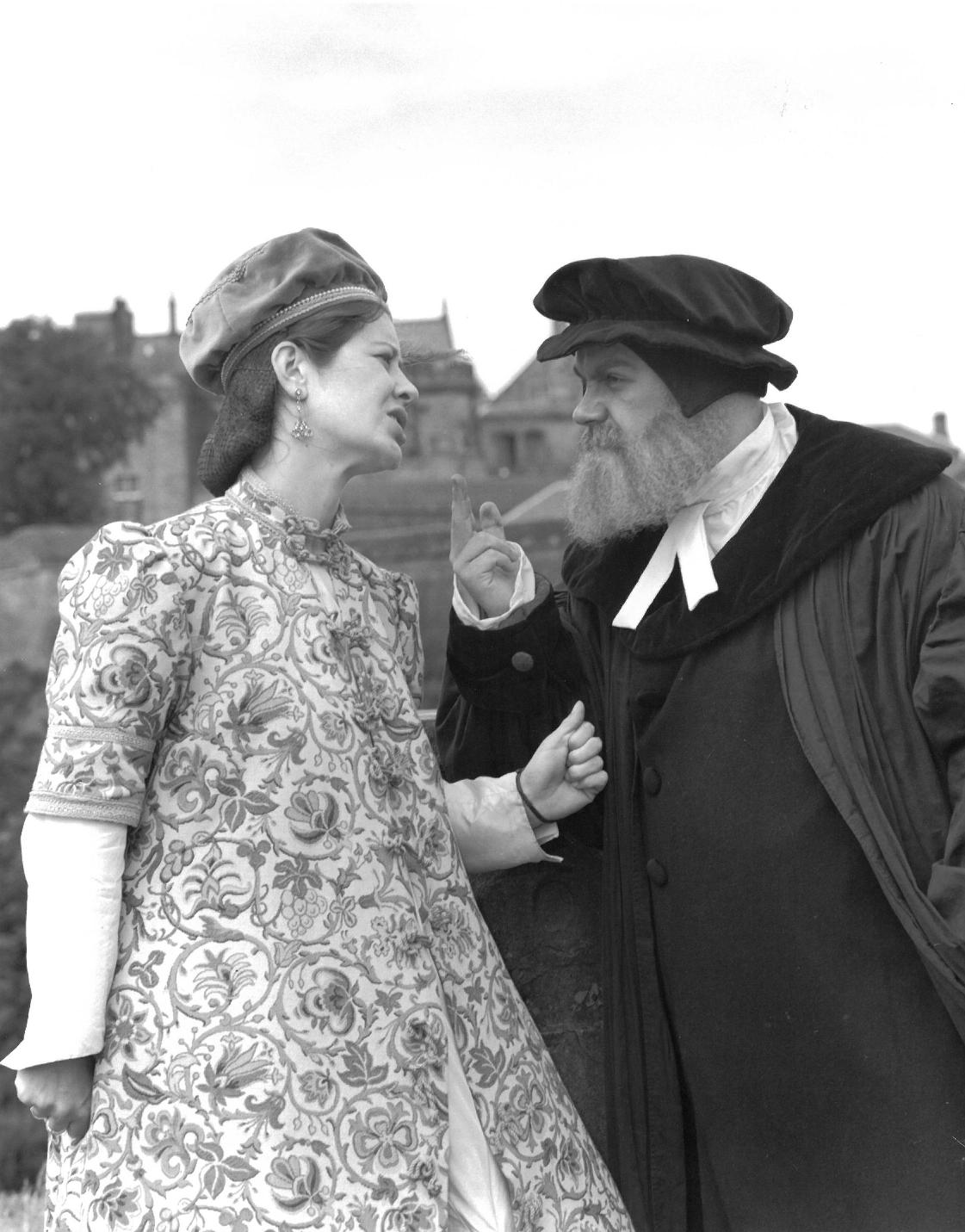
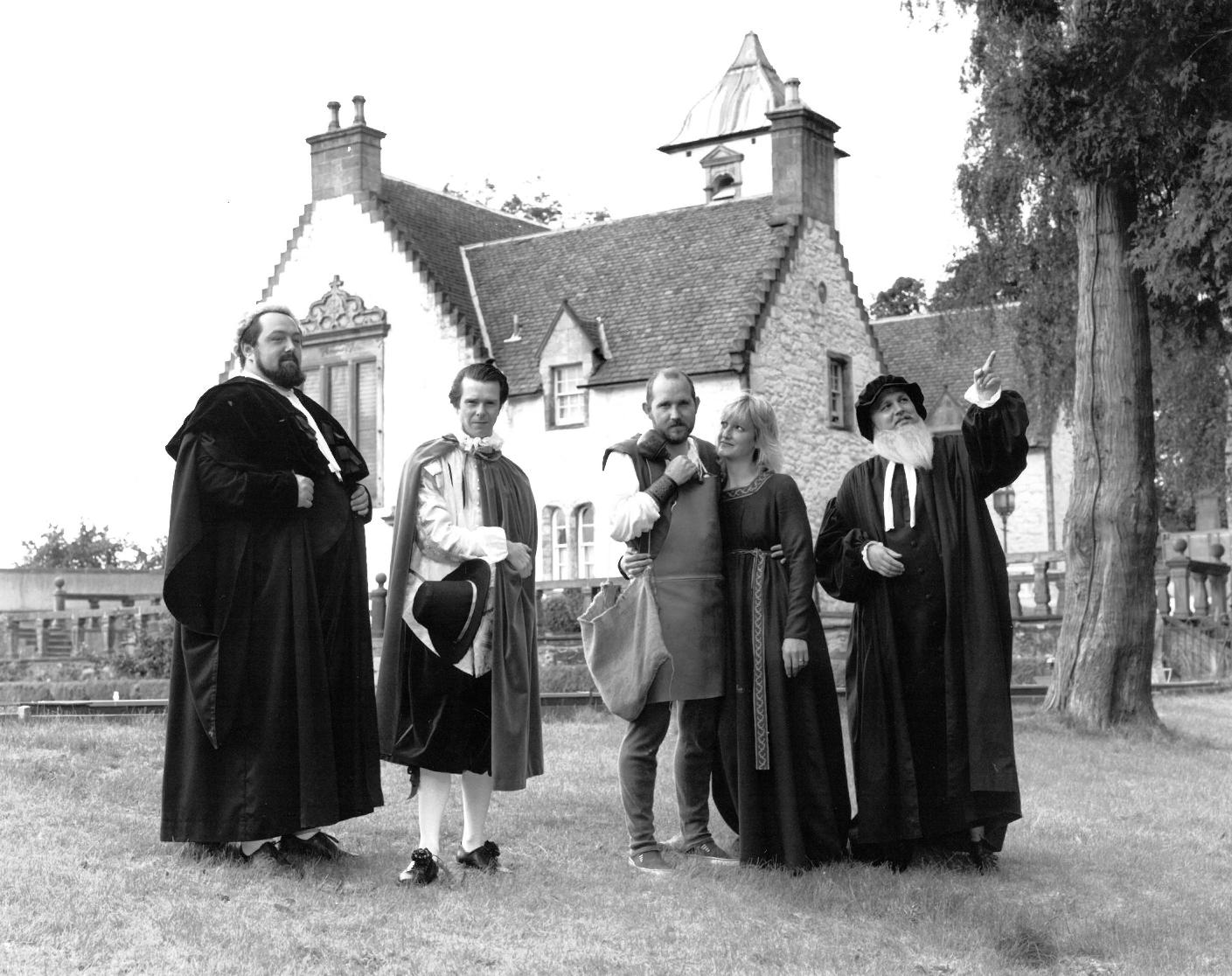
These images were taken to publicise the play about the relationship between the Reformation Minister John Knox and Mary Queen of Scots. Knox was the author of the book The first blast of the trumpet against the monstrous regiment of women, published in 1558. He was summoned by Queen Mary several times in the 1560s for interviews that were reported to have been somewhat acrimonious.
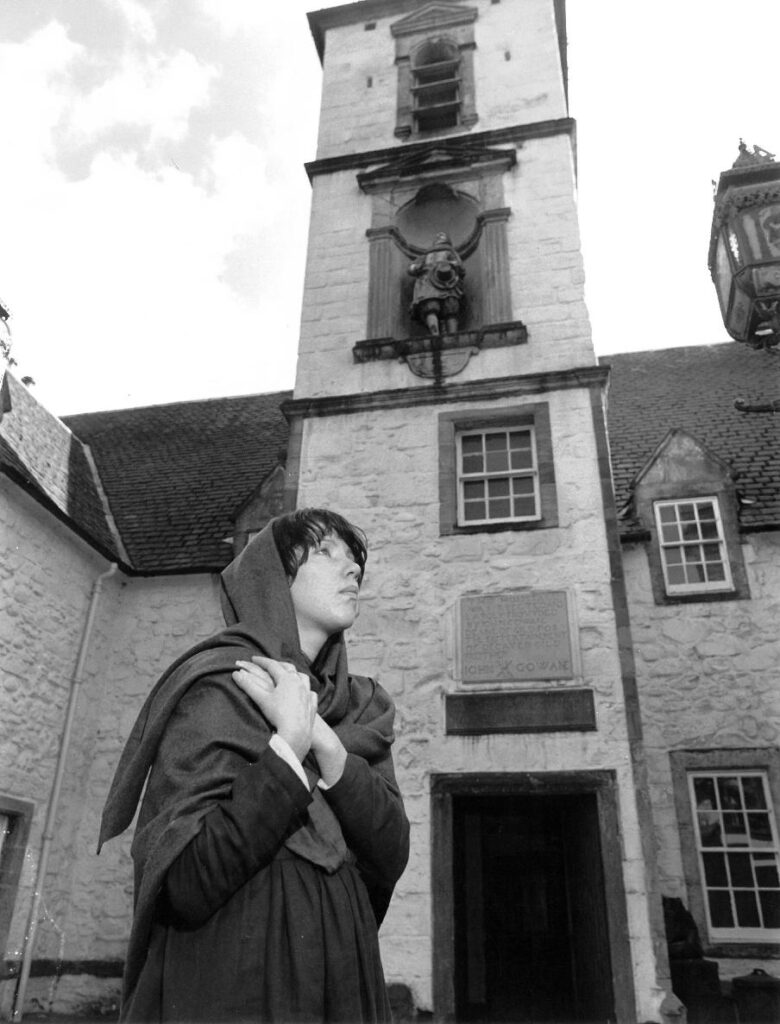
Agnes Cowane at Cowane’s Hospital 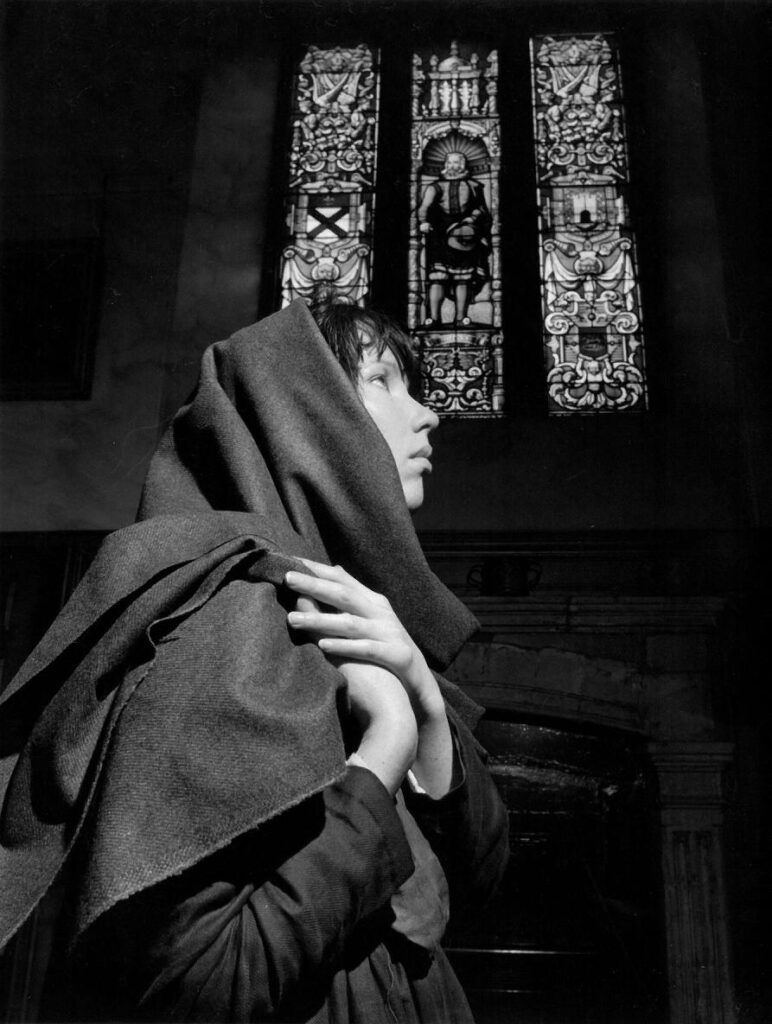
Agnes Cowane in the Holy Rude Kirk
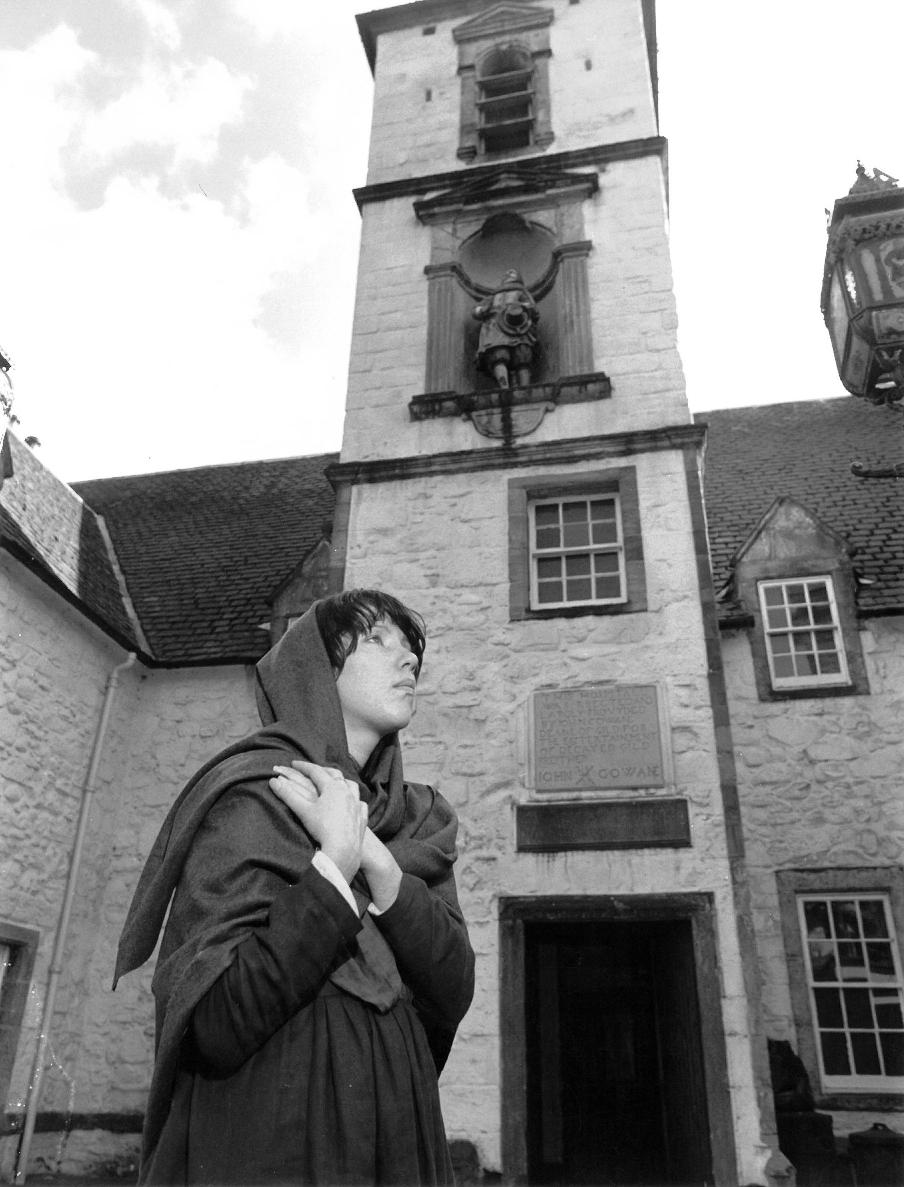
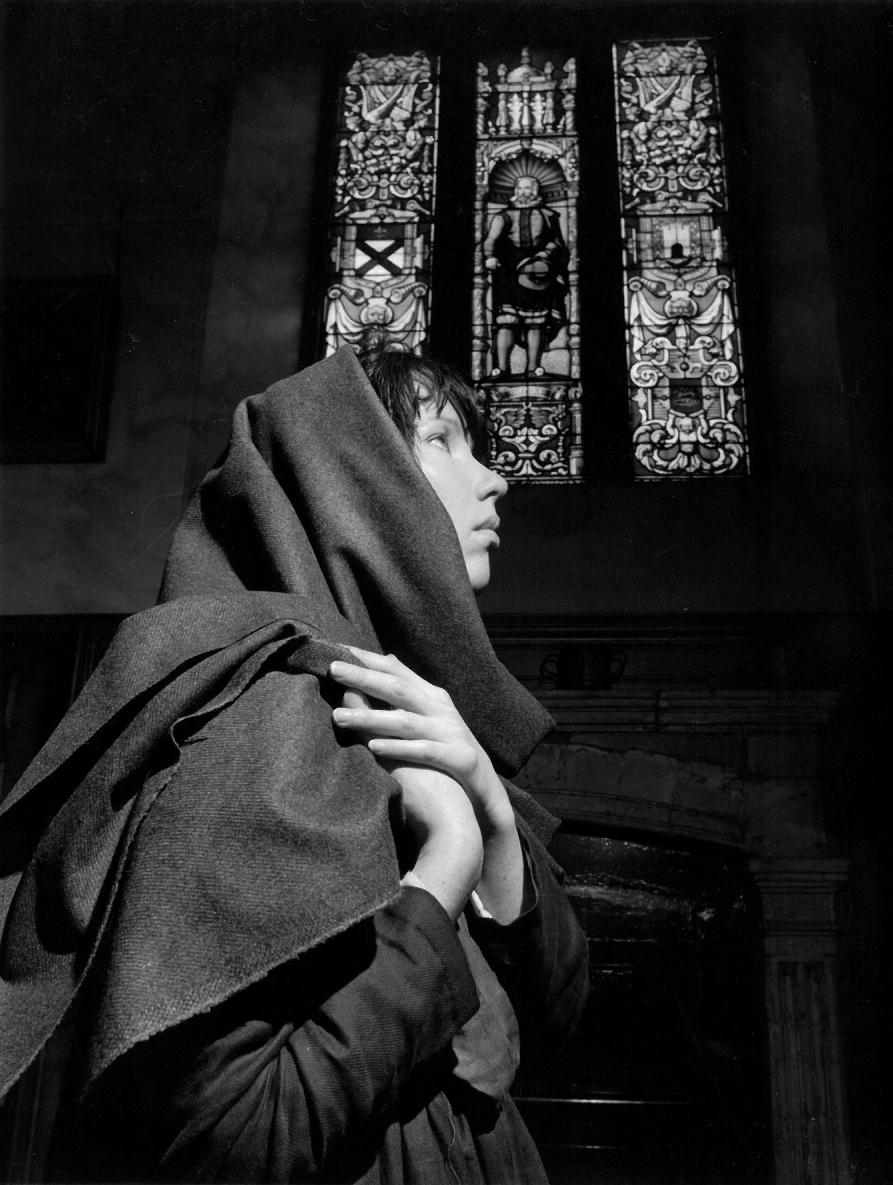
These images relate to the play written about Agnes Cowane, servant of Duncan Paterson, Merchant of Stirling, who gave birth to a child by another merchant, John Cowane (no relation) in 1611. John Cowane went on to leave a bequest in his will founding the charitable Trust that bears his name to this day. His social standing did not prevent the Holy Rude Kirk Session from summoning him to answer for his sin of fathering a child out of wedlock, or likewise from fining him six pounds for his trespass and ordering him to repent of it in public.
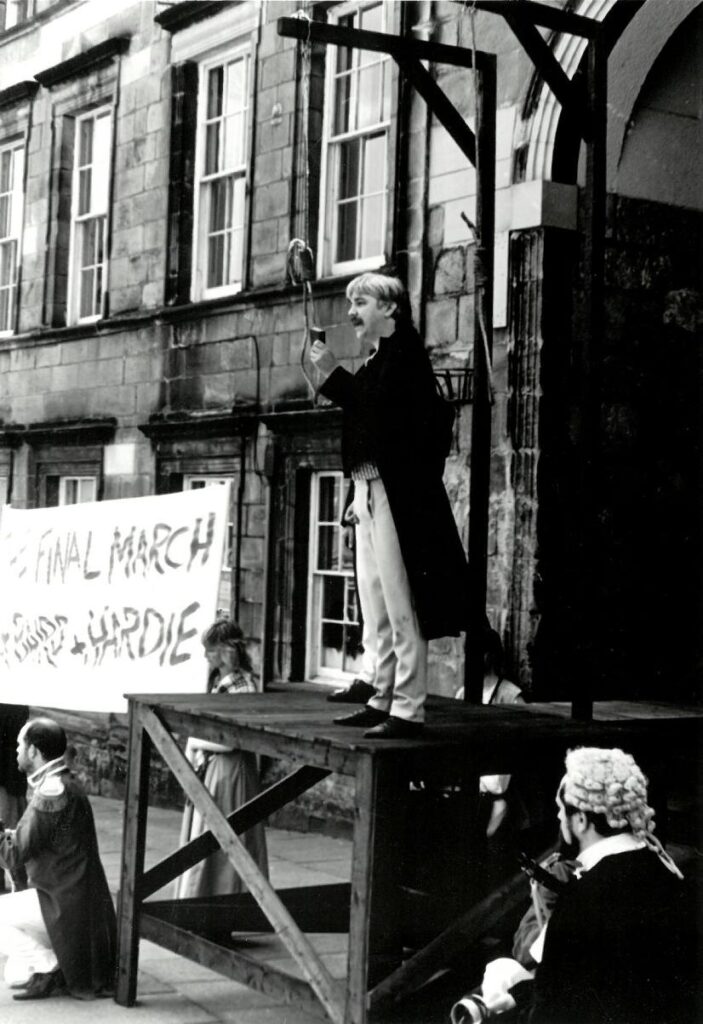
John Baird makes his speech on the scaffold 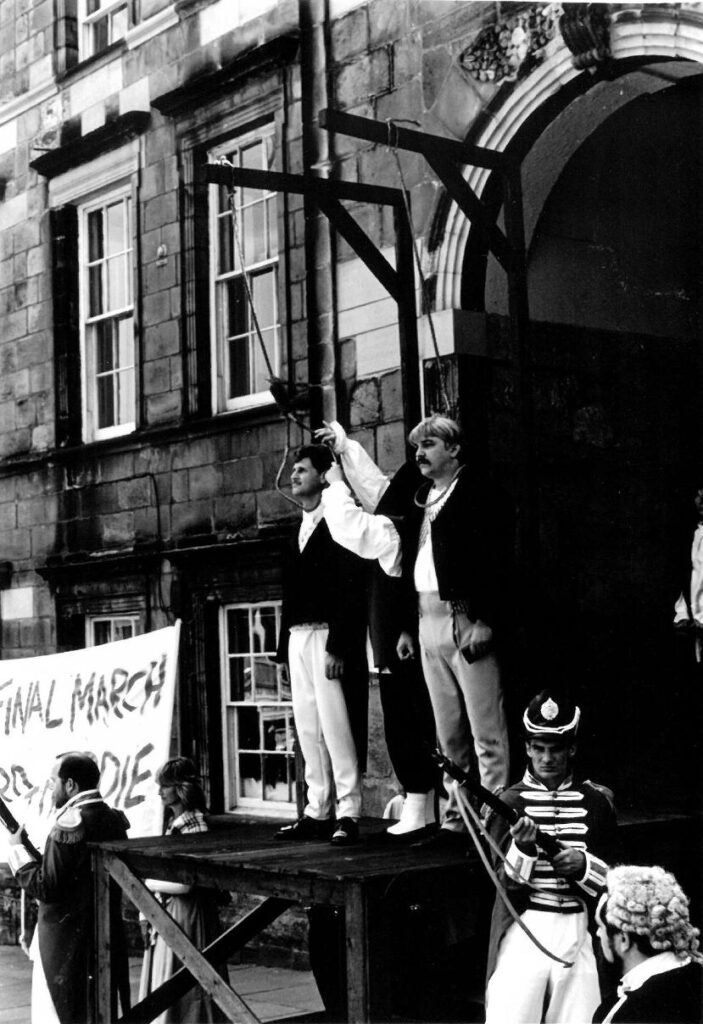
John Baird and Andrew Hardie at the Stirling Tolbooth
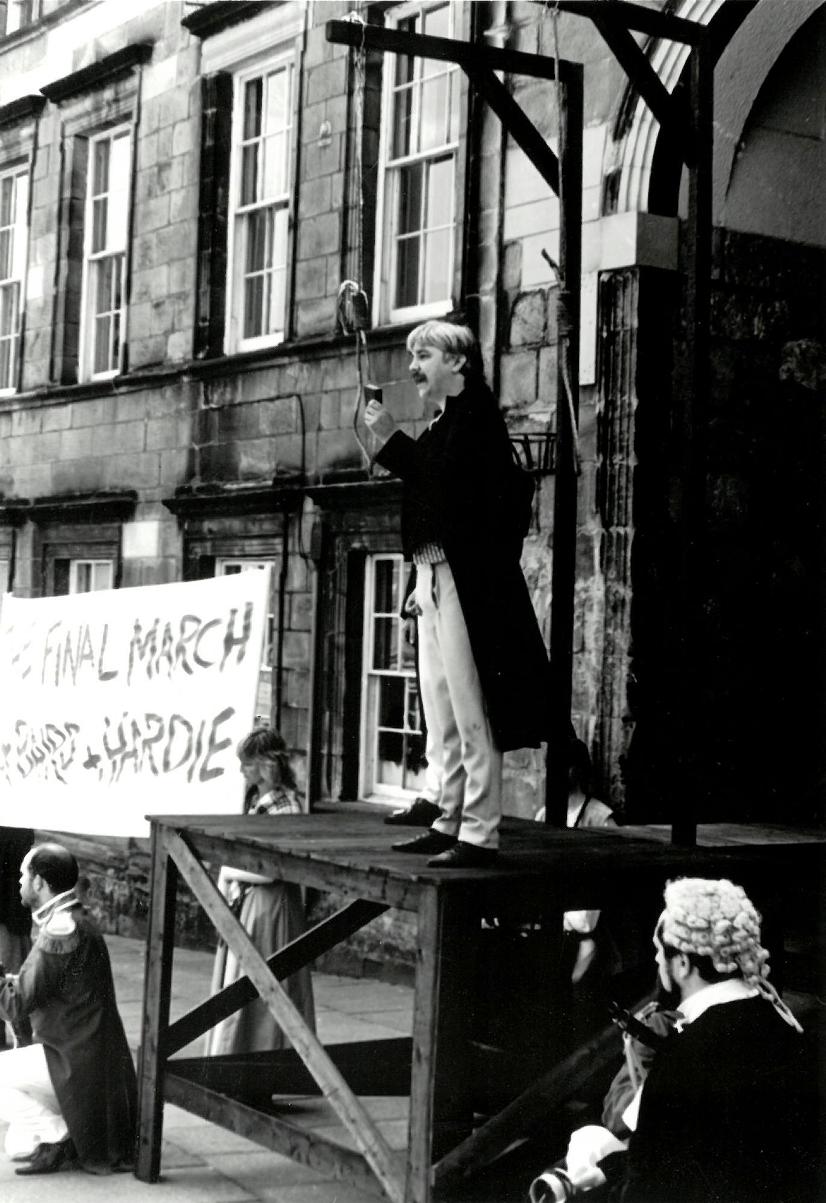
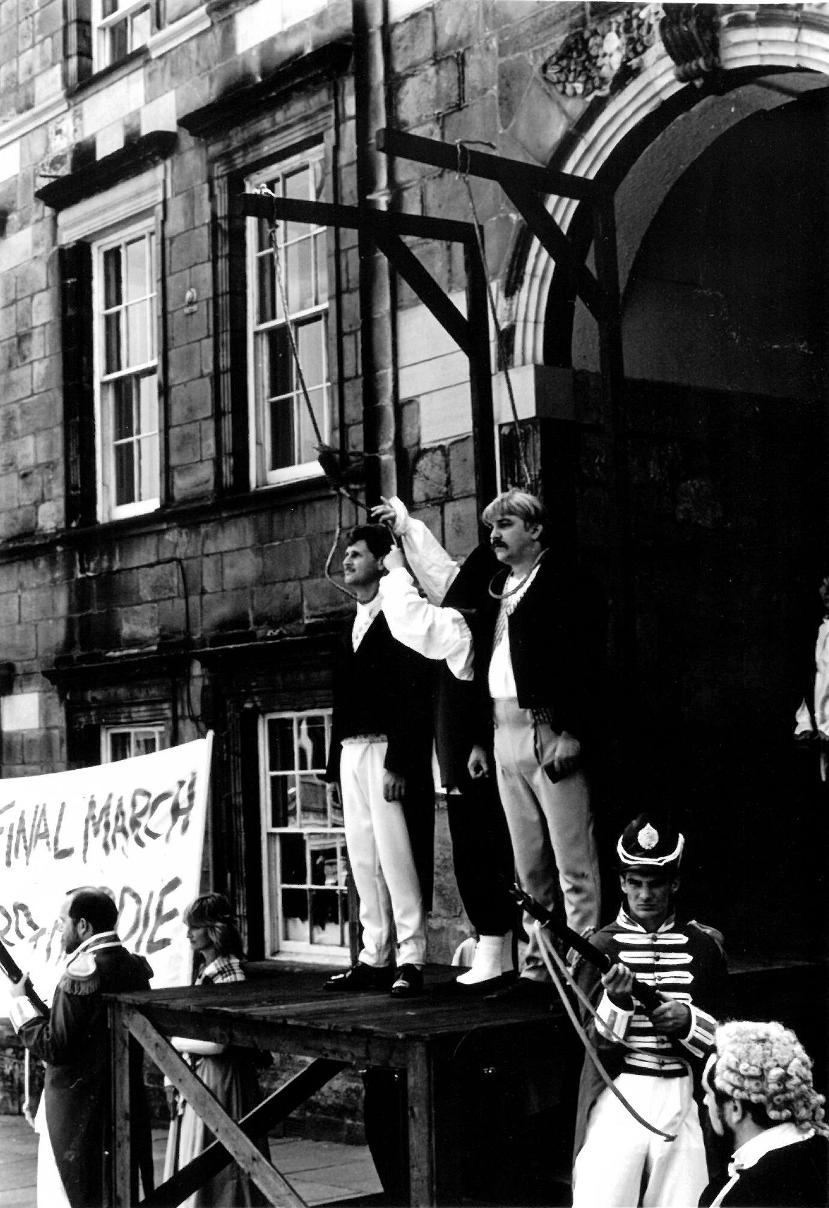
The so-called ringleaders of what we now know as the Radical Uprising that took place in April 1820 were the subject of another drama. John Baird and Andrew Hardie were executed for their part in the uprising in Stirling in the September of 1820. Over 2000 Stirling residents attended the execution.

